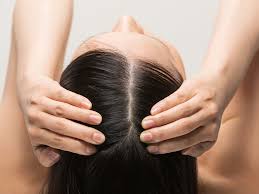
Hair Fall vs Hair Breakage: How to Tell the Difference

“Doctor, every time I comb my hair, I lose a handful.”
She looked worried as she showed me photos of hair collected from her bathroom drain.
“Am I going bald?”
I smiled.
“Maybe. Maybe not.”
“First, let’s answer one simple question…”
Is your hair actually falling out… or is it just breaking?
Most people think they’re the same thing.
They aren’t.
And treating the wrong problem can waste months of time, money, and effort.
The Consultation
I asked her,
“When you find hair on your pillow or comb, do you notice a tiny white bulb at one end?”
She looked confused.
“I’ve never checked.”
That’s where we started.
Because that tiny white bulb tells us whether the hair has fallen from the root—or snapped somewhere along its length.
Hair Fall: When the Hair Leaves the Root
Imagine a tree losing its leaves.
That’s what hair fall is.
The entire hair strand comes out from the scalp, usually with a tiny white bulb attached to one end.
This happens when the normal hair growth cycle is disturbed.
Some of the common causes include:
- Stress
- High fever or illness
- Nutritional deficiencies
- Hormonal imbalance
- PCOS
- Menopause
- Thyroid disorders
- Genetics
If hair fall continues for months, the overall hair density gradually reduces and the scalp starts becoming more visible.
Hair Breakage: When the Hair Snaps
Now imagine the tree is healthy…
But someone keeps cutting its branches.
That’s hair breakage.
The root remains healthy inside the scalp.
Only the hair shaft breaks.
Hair breakage is commonly caused by:
- Frequent heat styling
- Hair colouring or bleaching
- Chemical treatments
- Tight hairstyles
- Rough towel drying
- Dry, damaged hair
- Excessive friction while combing
People with hair breakage often say,
“My hair never grows beyond shoulder length.”
In reality…
It is growing.
It just keeps breaking before it becomes longer.
How Can You Tell the Difference at Home?
I asked my patient to pick up one of the hairs she had collected.
“Look closely at one end.”
- If you notice a tiny white bulb, it’s most likely hair fall.
- If both ends look blunt or broken without a bulb, it’s more likely hair breakage.
It’s a simple observation.
Not perfect.
But surprisingly helpful.
Then We Examined Her Scalp
The naked eye doesn’t always reveal the real problem.
That’s why we performed a detailed scalp examination using a trichoscope.
A trichoscope allows us to examine the scalp and hair under magnification, helping us identify problems that may not be visible otherwise.
We looked for:
- Hair density
- Miniaturized hairs
- Hair shaft thickness and diameter variation
- Broken hair shafts
- Signs of dandruff or scalp inflammation
- New baby hairs
- Overall scalp health
Sometimes, a patient has both hair fall and hair breakage at the same time.
Treating only one problem often leads to disappointing results.
The Biggest Mistake People Make
Many people immediately buy an expensive anti-hair-fall shampoo.
But shampoos remain on the scalp for less than a minute.
They rarely solve the underlying cause.
If your hair fall is due to nutritional deficiencies, hormones, genetics, or scalp disease, shampoo alone won’t fix it.
Similarly, if your problem is hair breakage caused by damage, medicines meant for hair fall won’t repair the hair shaft.
The right diagnosis always comes before the right treatment.
So What Happened to My Patient?
After examining her scalp with a trichoscope, we discovered something surprising.
She did have mild hormonal hair fall.
But most of the hair she was seeing in the shower wasn’t actually falling from the root.
It was breaking because of repeated hair colouring and frequent heat styling.
Her treatment focused on:
- Improving scalp health
- Correcting nutritional deficiencies
- Reducing hair shaft damage
- Protecting the hair from further breakage
- Following a personalised hair care routine
Three months later…
She wasn’t just losing less hair.
Her hair looked fuller.
Not because it suddenly started growing faster.
But because it had finally stopped breaking.
The Takeaway
Hair fall and hair breakage may look similar.
But they are completely different problems with different causes and different treatments.
If you’ve been trying products for months without seeing improvement, the issue may not be the products.
It may simply be that you’ve been treating the wrong condition.
Understanding whether your hair is falling from the root or breaking along the shaft is the first step toward choosing the right treatment—and getting the results you’re hoping for.
Looking for the right solution for hair fall or hair breakage? A detailed trichoscopic scalp analysis at Skin & Beyond, Surat, can help identify the root cause and create a personalized treatment plan for healthier, stronger hair.